Myopia (short-sightedness), hyperopia (long-sightedness) and astigmatism are common refractive errors that can be corrected with glasses, contact lenses or, in suitable patients, refractive surgery.
What Is It?
A refractive error occurs when the shape of the eye prevents light from focusing directly on the retina, causing blurred vision. The three most common types are myopia (short-sightedness), hyperopia (long-sightedness) and astigmatism (uneven corneal curvature), and combinations of these are common.
In children, myopia in particular has become increasingly common and often progresses through school years, which is why periodic eye examinations are recommended even without obvious complaints.
Refractive errors are diagnosed through a standard eye examination and refraction test, and can generally be corrected with glasses or contact lenses; some adults may also be candidates for refractive surgery such as LASIK or ICL after a full evaluation.
Symptoms & Indications
Refractive errors often present gradually, and in children may only be noticed through school or behavioural signs rather than a direct complaint of blurred vision.
Difficulty seeing the blackboard, road signs or distant objects clearly suggests myopia; difficulty with close work can suggest hyperopia.
Uncorrected refractive error, especially hyperopia or astigmatism, can cause headaches and eye strain, particularly with reading or screen use.
In children, sitting very close to the television or holding books close to the face can be an early sign of myopia.
Squinting to bring distant objects into focus is a common myopia sign in both children and adults.
Treatment Options
The most common, non-invasive way to correct myopia, hyperopia and astigmatism at any age, adjusted as the prescription changes.
An alternative to glasses for suitable patients, with their own care and hygiene requirements discussed during fitting.
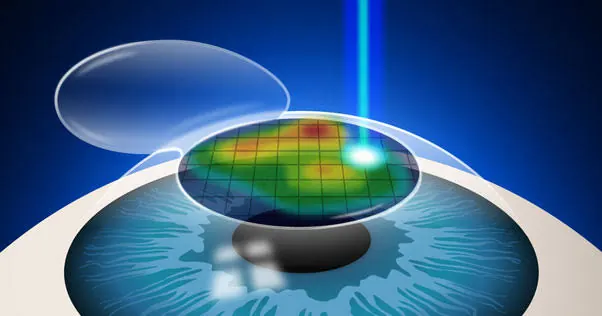
For adults with a stable refractive error who wish to reduce dependence on glasses/contacts, LASIK or ICL may be considered after a full eligibility assessment.
What To Expect
A refractive evaluation is a standard part of a comprehensive eye examination and does not require any invasive testing.
Distance and near vision are tested to quantify the degree of refractive error present.
A refraction test determines the precise glasses/contact lens prescription needed to correct your vision.
For adults considering LASIK or ICL, corneal topography and other measurements are done to assess suitability.
For children in particular, periodic re-checks are recommended since myopia can progress through school years.
Please note: Not every patient with a refractive error is a candidate for surgery; many are best managed with glasses or contact lenses. Surgical eligibility is confirmed only after in-person testing.
Common Questions
Evaluated and treated under Dr. Deepak Gandhi, Director of Gandhi Eye Centre, with clinical experience across cataract, glaucoma, cornea, retina and pediatric eye care.
View Doctor Profile →Book a comprehensive refractive evaluation for yourself or your child at Gandhi Eye Centre, Faridabad.