Pediatric Eye Specialist · Faridabad

Pediatric
Eye Care at
Gandhi Eye Centre

Children can't always tell you something's wrong with their vision. Our pediatric eye specialists diagnose and treat squint, lazy eye, refractive errors, and ROP with a gentle, child-friendly approach in Faridabad.

Improvement Rate
97%
Children Treated
15,000+
Experience
25+ Yrs

15K+

Children Treated

97%

Improvement Rate

25+

Years of Excellence

5+

Pediatric Specialists

A child's visual system is still developing until around age 8

Understanding Kids' Vision

Why Children's Eye Care is Different

A child's visual system is still developing during the early years of life. Problems left untreated during this window can cause permanent vision loss — even if the eye itself is otherwise healthy — making early screening essential.

1
Early Screening

Vision problems in babies and toddlers often show no obvious signs, which is why routine pediatric eye checks matter from infancy.

2
Vision Development Window

The brain's visual pathways mature until about age 8 — problems corrected before this age have a far better long-term outcome.

3
Detection of Silent Problems

Conditions like lazy eye or mild squint can go unnoticed by parents and teachers until a proper eye exam is done.

4
Treatment & Therapy

Glasses, patching, vision therapy, or surgery — timed correctly, these treatments can fully restore normal vision in most children.

Conditions We Treat

Common Pediatric Eye Conditions

From newborn screening to teenage myopia control, our pediatric team handles every stage of your child's visual development.
Squint (Strabismus)
Squint (Strabismus)
Lazy Eye (Amblyopia)
Refractive Errors
Refractive Errors
Retinopathy of Prematurity
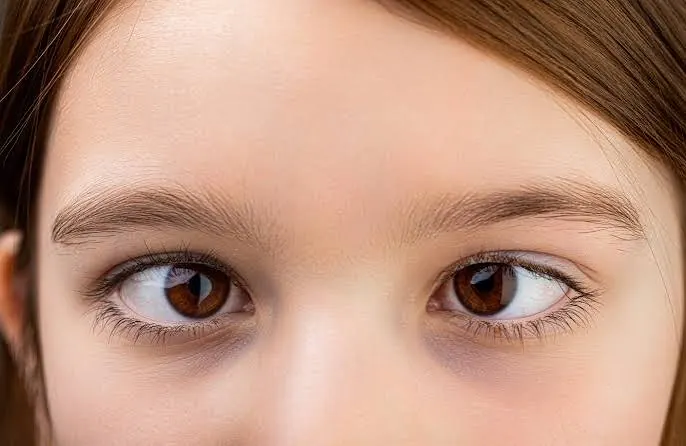
Squint (Strabismus)

Misalignment where the eyes point in different directions. Beyond appearance, untreated squint can cause lazy eye and loss of depth perception — best corrected early with glasses, therapy, or surgery.

Lazy Eye (Amblyopia)

The brain favours one eye over a weaker one, causing permanently reduced vision if untreated. Patching therapy and glasses work best when started before age 7-8.

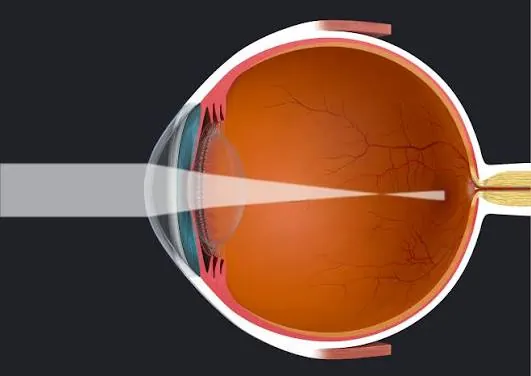
Refractive Errors

Myopia (near-sightedness), hyperopia, and astigmatism are common in school-going children and are easily corrected with the right glasses prescription.

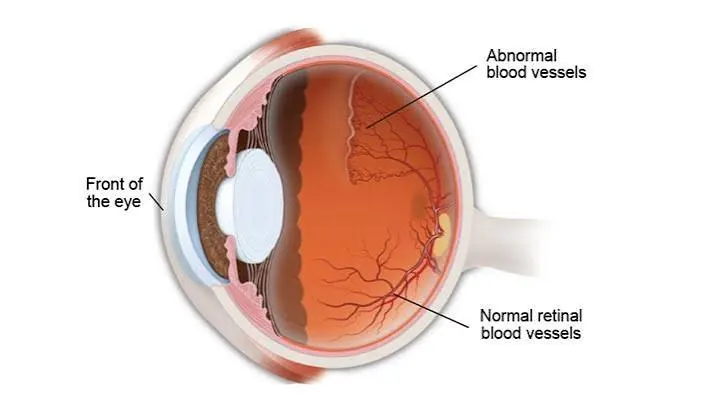
Retinopathy of Prematurity (ROP)

Abnormal retinal blood vessel growth in premature or low birth-weight babies. Timely screening and laser treatment can prevent permanent blindness.

Congenital Cataract

A cloudy lens present from birth or early infancy that blocks normal visual development. Requires prompt surgical removal to prevent permanent amblyopia.

Watering Eyes (Blocked Tear Duct)

Common in infants due to an incompletely developed tear drainage system, causing constant watering or discharge. Often resolves with massage or a simple procedure.
Warning Signs

Signs Your Child May Have a Vision Problem

Children rarely complain about blurry vision — they simply think it's normal. Watch for these behavioural signs instead:

Eyes Not Aligned or Crossed

One or both eyes drifting inward, outward, up, or down — especially when tired — needs evaluation.

Squinting or Head Tilting

Frequently squinting, closing one eye, or tilting the head to see better can indicate a refractive or alignment problem.

Sitting Too Close to the TV

Consistently sitting very close to screens or holding books close to the face is a common sign of near-sightedness.

Frequent Eye Rubbing

Excessive rubbing, blinking, or eye discomfort — especially during reading or screen time — may point to a vision or focusing issue.

One Eye Watering Constantly

Persistent watering or discharge from one eye, especially in infants, often indicates a blocked tear duct.

Poor School Performance

Difficulty reading the blackboard, losing place while reading, or declining academic performance can stem from uncorrected vision.

See a Pediatric Eye Specialist If Your Child Has
Eyes that appear crossed or misaligned after 4 months of age
A white reflex visible in flash photographs
Persistent head tilting or squinting to see
Premature birth requiring ROP screening
Watering or discharge from the eyes since birth
Failed a school vision screening test
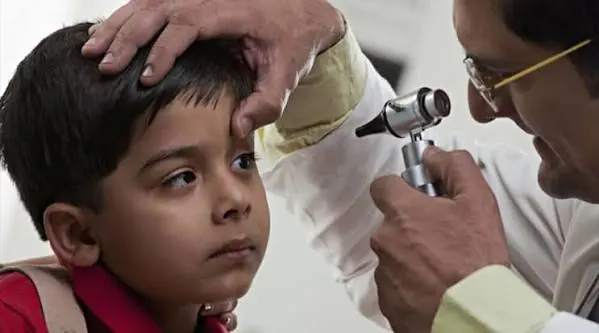
Child eye exam
Child-Friendly Examination
Painless · Playful · Precise
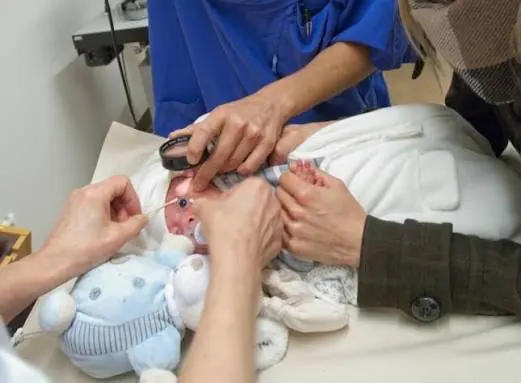
ROP screening
Newborn & ROP Screening
For premature babies
Root Causes

What Causes Vision Problems in Children?

Pediatric eye problems can arise before, during, or after birth — knowing the risk factors helps catch issues early.

Premature Birth

Babies born before 31 weeks or under 1.5kg are at risk of ROP and need mandatory dilated retina screening starting at 4 weeks of age.

Genetics & Family History

A family history of squint, lazy eye, or high refractive errors significantly increases a child's own risk.

Prolonged Screen Time

Excessive near-work and reduced outdoor time are strongly linked to the rising rates of childhood myopia today.

Untreated Refractive Errors

Uncorrected power in one or both eyes during early childhood can lead directly to lazy eye if not managed with glasses in time.

Birth Trauma or Injury

Forceps delivery or other birth-related trauma can occasionally affect the developing visual system.

Congenital Conditions

Conditions present at birth, such as congenital cataract or ptosis (drooping eyelid), can block normal visual development if untreated.

Diagnosis

How We Evaluate Your Child's Eyes

Our pediatric evaluations are gentle, playful, and designed to keep children comfortable throughout.

Vision Screening

Age-appropriate charts and picture tests measure visual acuity, even for children too young to read letters.

Cycloplegic Refraction

Special dilating drops relax the child's focusing muscles for an accurate, unbiased power measurement.

Cover Test (Squint)

A simple cover-uncover test detects subtle eye misalignment that may not be obvious to parents.

Retinoscopy

An objective test using a handheld light to measure refractive error without needing the child to respond verbally.

Fundus Examination

A dilated examination of the retina rules out congenital or acquired retinal conditions affecting vision.

Colour Vision Test

Identifies colour blindness early, which can otherwise go unnoticed and affect learning activities at school.

Stereopsis (3D Vision) Test

Checks depth perception, which is often reduced in children with squint or amblyopia.

ROP Screening

Mandatory dilated retinal screening for premature or low birth-weight babies to catch ROP before it threatens vision.

Treatment Options

Pediatric Eye Treatments at Gandhi Eye Centre

Gentle, age-appropriate treatments designed to give your child the best possible visual outcome.

01
Glasses / Spectacle Correction
Most Common
  • Corrects myopia, hyperopia & astigmatism
  • Kid-friendly, durable frames available
  • Prevents amblyopia from developing
  • Regular power checks as your child grows
  • Myopia control lens options available
02
Eye Patching Therapy
Amblyopia
  • Strengthens the weaker (lazy) eye
  • Forces the brain to use the weaker eye
  • Most effective before age 7-8
  • Duration tailored to severity
  • Fun, colourful patches for kids
03
Squint Surgery
Strabismus
  • Repositions the eye muscles for alignment
  • Restores binocular vision & depth perception
  • Day-care procedure, quick recovery
  • Improves both function and appearance
  • Safe under pediatric anesthesia protocols
04
Vision Therapy
Binocular Vision
  • Structured eye exercises to build coordination
  • Improves focusing and tracking skills
  • Often combined with patching or surgery
  • Fun, interactive sessions for children
  • Helps with reading-related visual strain
05
ROP Laser Treatment
Premature Babies
  • Laser treats abnormal retinal vessel growth
  • Prevents progression to retinal detachment
  • Performed as soon as ROP is diagnosed
  • Excellent outcomes with timely treatment
  • Close follow-up until retina fully matures
06
Congenital Cataract Surgery
Early Infancy
  • Removes the cloudy lens obstructing vision
  • Performed early to allow normal development
  • Followed by glasses, contact lens, or IOL
  • Combined with vision therapy afterward
  • Best outcomes with early diagnosis
Don't Delay

When Should You Bring Your Child In?

Early Detection
Changes Everything

Unlike adult vision problems, childhood eye conditions have a critical treatment window. Lazy eye left untreated past age 7-8 often cannot be fully corrected later in life.

A simple, painless screening today can protect your child's vision for a lifetime. When in doubt, get them checked.

Call Us Now
Book a Checkup If Your Child Has:
Eyes that appear crossed or misaligned
Frequent squinting or head tilting to see
Difficulty reading the blackboard at school
Was born premature or with low birth weight
Constant watering or discharge from one eye
Never had a first eye check by age 3
Every child should have their first eye exam by age 3

Many pediatric eye conditions have no visible symptoms in the early stages. A routine check-up is the only reliable way to catch them in time.

Common Questions

Frequently Asked Questions

Ideally, a baseline screening should happen by 6 months, followed by a comprehensive exam around age 3, and again before starting school. Premature babies need earlier screening for ROP, starting at 4 weeks of age.

Some cases of squint, especially those linked to refractive errors, can improve significantly with glasses alone or with vision therapy. Surgery is reserved for cases where alignment doesn't improve with non-surgical measures.

Treatment is most effective before age 7-8, while the visual pathways are still developing. Some improvement is still possible in older children and even some adults, but outcomes are generally better with earlier treatment — which is why early screening matters so much.

Yes, patching therapy is a well-established, safe treatment used worldwide for decades. The duration and hours per day are carefully tailored by your pediatric specialist to your child's age and severity of amblyopia.

Retinopathy of Prematurity (ROP) is abnormal blood vessel growth in the retina of premature babies. All babies born before 34 weeks or under 2kg birth weight need mandatory dilated retina screening, starting around 4 weeks after birth.

Yes, glasses are completely safe and are often the single most important treatment to prevent amblyopia in young children with significant refractive errors. Child-friendly, durable frames make them comfortable for daily wear.

Watch for signs like sitting too close to the TV, squinting, head tilting, or complaints of headaches while reading. Since children rarely report blurry vision themselves, a routine eye exam is the most reliable way to know for sure.
Transparent Pricing

Pediatric Eye Care Pricing

Every package includes a child-friendly evaluation and follow-up guidance for parents.

Pediatric Eye Checkup
Complete Vision Evaluation
₹500/visit
  • Vision screening & cover test
  • Cycloplegic refraction
  • Dilated fundus examination
  • Parent guidance & report
Book Now
Amblyopia / Vision Therapy
Lazy Eye Program
₹8,000/course
  • Structured patching & therapy plan
  • Periodic progress reviews
  • Fun, interactive vision exercises
  • Parent coaching included
  • Personalised duration & schedule
Book Consultation

*Prices are indicative. Final cost depends on consultation, condition, and treatment chosen. Insurance support available.

Get In Touch

Contact Us

Book your child's eye checkup or get expert advice — our pediatric team is here to help.

Reach Us Directly

Phone / WhatsApp
+91 98182 19196
Mon–Sat: 10 AM – 8 PM
Email
gandhieyefbd@gmail.com
We respond within 24 hours
Address
Gandhi Eye Centre
Shop No. 118, 9-10 Dividing Rd, Block G, Sector 9, Faridabad, Haryana 121006
Working Hours
Monday – Saturday
10:00 AM – 8:00 PM  |  Sunday: 10 AM – 2 PM

Send Us a Message

Give Your Child the Gift of Clear Sight

Gentle, expert pediatric eye specialists. Child-friendly clinic. Compassionate care.
Book your child's eye checkup at Gandhi Eye Centre, Faridabad today.